

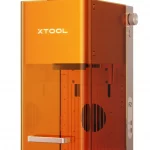



xTool Studio — formerly xTool Creative Space, or XCS—is xTool’s proprietary design and production software for its growing line of lasers, printers, and cutters. xTool Studio is a core strategy to differentiate the xTool brand for the mass market. For several of its newest products, xTool has chosen to require this application, creating a more closed ecosystem. That means widely used alternatives such as LightBurn cannot be used, and there is limited room for third-party add-ons or open integrations. The decision has sparked a lively, and at times heated, debate across the laser engraving and cutting community, particularly because XCS still trails LightBurn in advanced features, workflow flexibility, and overall maturity.
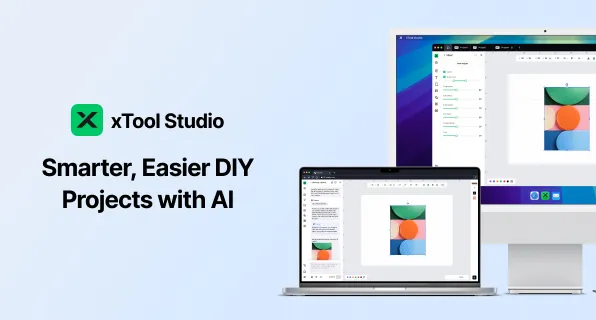
XCS is improving, but the strategic question remains: why would xTool choose a more closed software model? The likely answer is similar to the rationale behind Apple’s approach to the iPhone: tighter control over the experience, deeper brand integration, and a clearer path to long-term ecosystem value.
User Experience
The strongest reason for xTool’s closed architecture is the ability to deliver a more predictable and consistent user experience. xTool’s product line is increasingly aimed at a broader mass market of crafters, artists, educators, and small-business creators. That audience is different from the innovators and early adopters who helped define the first generation of desktop laser products. Early users often came from a home-built, experimental environment and were comfortable tinkering with hardware, software, and settings. The newer, larger audience expects an approachable, out-of-the-box solution with a short learning curve and fewer technical barriers.
What xTool Can Gain with XCS
Consistent, Faster Customer Support
A closed software environment dramatically reduces the number of variables that support teams must diagnose. Instead of troubleshooting across multiple applications, plugins, drivers, and workflows, xTool can train its support organization deeply on one primary platform. Over time, that focus can support stronger self-service resources, clearer documentation, and more effective tiered support.
Competitive Differentiator
If executed well, XCS can become a meaningful competitive differentiator. The mainstream creator technology market is expanding quickly, with companies such as GlowForge, LaserPecker, WeCreate, OMTech, and Thunder Laser all competing for attention. A polished, intuitive, deeply integrated application could help xTool stand apart from both lower-cost hardware competitors and more fragmented software ecosystems. I also expect xTool to maintain more open options for industrial users, whose needs are different from those of the general creator market.
Ecommerce Enabler
XCS already includes an integrated ecommerce store that makes it easier to order supplies while designing and preparing projects for production. This fits naturally with mass-market creators who want a convenient way to find compatible materials, reduce trial and error, and move quickly from idea to finished product. If xTool develops this capability further, the software could become not only a production tool but also a commerce and distribution channel for creators.
Strengthen Relationships
A well-executed software strategy can strengthen the relationship between customer and brand. When the hardware, software, materials, support, and community experience feel connected, customers are more likely to stay within the ecosystem. Done poorly, however, the same strategy can feel restrictive and push users away. The difference will depend on whether xTool makes XCS feel empowering rather than limiting.
Key Issues
xTool faces several issues that must be addressed quickly if owners of newer products such as the xTool F2, M2, and O1 are going to realize the full creative promise of the technology.
Lightburn’s Established User Base
LightBurn has a large, active community with add-ons, templates, tutorials, and deep technical discussions. xTool has begun building its own base of user-generated projects and templates, but it will need to invest heavily to grow that community. The challenge is to support non-technical creators while also keeping more advanced and industrial users engaged. The recent launch of the xTool Squad program appears to be a step in that direction. I will share more thoughts on that program and my experience with it in a future article.
Weak Workgroup/Workflow Integration
Even highly talented creators often collaborate with others on design, production, and fulfillment. Today, XCS does not offer strong integrated tools for group workflow or design collaboration. I suspect xTool is already exploring partnerships or developing its own solution. If so, it would not be surprising to see future collaboration features offered through free and paid tiers, which has become standard across the software-as-a-service market.
In-App eCommerce Options
A major drawback of XCS is its limited connection to the dominant maker, design, and ecommerce platforms in each region. Integrations with tools such as Canva, Shopify, Etsy, and Adobe Express would make the platform far more useful. xTool should also consider broader partnerships across creative markets, including fabric, metal, paper, and other materials-based communities. The goal should be simple: let creators use the tools and assets they already rely on while still producing high-quality output through XCS.
Scaling Customer Service and Support
I recently ran into an issue with my F2 slide extension accessory. When I tried to use xTool’s self-support resources, I found the process more complicated than it needed to be. There also appears to be a gap in the support forums for experienced technical users who need deeper diagnosis and more advanced solutions.
That said, my own support inquiries—including one about the slide extension and another when I first opened the box—were answered overnight. That is better than some of what I have seen reported on Facebook, Reddit, and elsewhere. Still, as xTool’s non-technical customer base grows, the company will need to scale its support resources and make fast, clear, high-quality help a higher priority.
XCS Mobile App Scope
xTool does have a mobile app, but at this point it feels more like a placeholder than a genuinely useful production tool. Even as someone who still prefers a full computer for many tasks, I rely on my phone constantly. To fully deliver on the portability promise of a product like the F2, xTool needs a strong mobile experience: access to a design library, wireless output to the engraver, and enough functionality to make quick production realistic. Today, I still need a slim tablet such as a Microsoft Surface Pro to make the F2 feel truly portable. xTool should treat a polished, capable mobile app as a priority.
Regional Focus and Brand Perception
xTool is an impressive example of a Chinese company rapidly building a global brand in an emerging industry. To sustain that growth, xTool must continue positioning itself as a trusted, secure, international company with authentic roots in each region it serves. The brand cannot afford to be viewed through a cultural or political lens as a company using software control simply to dominate a market. Trust, transparency, and regional responsiveness will matter.
Expectations
The ongoing improvements to XCS suggest that xTool sees the application as more than a control mechanism. At its best, XCS can become an experience-defining platform that supports the company’s broader brand value. The strategy has clear risks, especially for advanced users who value openness and flexibility. But if xTool listens carefully, improves quickly, and builds the right partnerships, XCS could become a powerful advantage rather than a source of frustration. As always, time will tell.
As of July 13, 2026, the current xTool Creative Suite mobile app does not yet deliver the level of utility needed to fully support the xTool product line or create meaningful competitive differentiation. The app provides basic functionality, but it does not yet take full advantage of what a mobile device can offer.
I expect future versions of the app to move closer to feature parity with the desktop version of xTool Creative Suite and to support the full range of xTool engravers and printers. But feature parity should not be the only goal. xTool has an opportunity to take a true mobile-first approach: one that focuses on the situations where mobile devices are not just convenient, but genuinely better suited to the work.
Core Mobile Use Case Requirements
- Output queuing, so users can create and edit one job while another job is running.
- Reliable on-device job timing, status updates, and notifications.
- Workflow options that allow one person to design and send jobs to an output queue while another person controls production from the app.
- Operation without a stable internet connection, using a local WAN or LAN when internet access is unreliable or provided through mobile device sharing.
- Easy access to a creator’s template library stored locally on a device.
Sample Use Cases
Today, many creators rely on a small laptop, I use a Microsoft Surface Pro, to manage output near the device. That approach works, but it keeps the creator physically tied to the production area and requires a larger setup than many mobile selling environments allow. The portability of the xTool F2 creates a different opportunity: a lightweight workflow where design, customization, queue management, and production control can happen from a tablet or phone.
Craft and Novelty Fairs
Craft fairs already include many booths selling laser-cut and engraved products. More recently, there has been visible growth in real-time, in-booth customization of stock or customer-selected items. That trend points to a significant opportunity for xTool: support creators with a mobile toolset that makes it easy to produce fast, high-quality customized goods in front of customers.
Storefronts and Galleries
In storefronts and galleries, owners and staff need a simple interface they can use while standing or walking with a customer. The ideal experience does not require a design desk, a register counter, or an employee stationed next to the machine. It should support a refined walk-around sales process where a staff member can discuss options, personalize an item, and increase the sale’s value with minimal technical friction.
Branded giveaways are a familiar way to attract booth traffic, start conversations, and reinforce brand awareness. With the xTool F2, an exhibitor could do more than personalize swag at a booth. A team member could move through the event, talk with prospects, and initiate a customized item during a session break, lunch, or informal conversation.
That workflow creates a better lead experience. While the item is being produced, the conversation can continue and the lead can be qualified. When the prospect comes to the booth to pick up the finished item, the right sales team member can be ready to continue the discussion. Prospects who arrive directly at the booth can also be encouraged to spend more time with the team while they wait, or they can return at a scheduled pickup time.
Consumer Events
Fan expos, comic conventions, trading card shows, home shows, and other consumer events are well suited to portable, fast, on-site customization. Small sellers can use the xTool F2 to personalize products in settings where space is limited and customer interaction matters. A tablet-optimized XCS app could give sellers quick access to a prepared template library, support rapid customization, and reduce the need for cables or a fixed workstation next to the hardware.
xTool as the Easy-to-Use Platform for Real-Time Customization
The current environment may be enough for early adopters and technically confident users. A stronger mobile platform could open the door to a much larger group of non-technical makers, crafters, and small sellers.
The growth of the xTool product line, including the M2 and future portable systems, suggests a broader opportunity. If xTool pairs improved mobile software with focused support for business-to-consumer customization workflows, it can become the preferred platform for portable promotional commerce.
Disclosure
I have just joined the xTool Squad to offer demonstrations, training and potentially sales of the xTool F2 and other xTool products.


Leave a Reply